


TPMS Light On After a Cold Kingston Night? Solid, Flashing and When to Pull Over


A TPMS light means one or more tires are low: FCA Canada's 2026 Ram 1500, Jeep Grand Cherokee and Chrysler Pacifica owner's manuals say it shows that pressure is "lower than the recommended value and/or that slow pressure loss is occurring."
After a cold Kingston night, the TPMS light may be on when you start out, and the three 2026 manuals say driving does not switch it off. In the three 2026 manuals, the light stays on until the tires are back at or above the cold pressure printed on the vehicle's tire placard.
In the three 2026 manuals, a solid light means a low tire, while a light that flashes and then stays on signals a fault in the monitoring system itself. With a tire that looks low or flat, or a change in steering or handling, pull over at the first safe place before anything else.
Reset steps are not part of this article. The owner's manual describes the system in your vehicle, and our service team can look at the light with you.
Key Takeaways
In FCA Canada's 2026 Ram 1500, Grand Cherokee and Pacifica manuals, a TPMS light means one or more of the four road tires is low or losing air slowly. FCA Canada's 2026 Ram 1500, Grand Cherokee and Pacifica manuals measure low pressure against the recommended cold pressure on the vehicle's tire placard.
Driving does not turn off a TPMS light that a cold night brought on, in FCA Canada's 2026 Ram 1500, Grand Cherokee and Pacifica manuals. The cold-weather example in FCA Canada's 2026 Ram 1500, Grand Cherokee and Pacifica manuals has the tires gain pressure as they warm on the road, yet "the TPMS Warning Light will still be on" until they are filled to the cold placard pressure.
In FCA Canada's 2026 Ram 1500, Grand Cherokee and Pacifica manuals, a solid TPMS light signals a low tire, and a light that flashes and then stays on signals a system fault. FCA Canada's 2026 Ram 1500, Grand Cherokee and Pacifica manuals say that while the fault light is on, the system "may not be able to detect or signal low tire pressure as intended."
For Jim Thompson Chrysler in Kingston, a cold-morning TPMS light means a cold tire check, not a wait for warmer weather. FCA Canada's 2026 Ram 1500, Grand Cherokee and Pacifica manuals measure every TPMS warning against a placard at the "driver's side B-pillar or the rear edge of the driver's side door."
FCA Canada's 2026 Ram 1500, Grand Cherokee and Pacifica manuals ask for a tire pressure check at least monthly, and more often when outdoor temperatures swing widely. FCA Canada's 2026 Ram 1500 and Pacifica manuals say "Check tire pressures more often if subject to a wide range of outdoor temperatures."
Which Tires Is the TPMS Light Warning You About?
In the three 2026 manuals, the TPMS light warns about the four road tires: it comes on, with a chime, when one or more of them falls below a low-pressure warning limit based on the recommended cold pressure on the tire placard.
The warning-light pages of the three 2026 manuals say the light means pressure is "lower than the recommended value and/or that slow pressure loss is occurring."
By the three 2026 manuals' description, a cold night and a tire slowly losing air can each bring on the TPMS light. The light by itself does not say which one is happening.
The Tire Placard on the Driver's Side
The three 2026 manuals measure every TPMS warning against the vehicle's recommended cold pressure, printed on a placard at the "driver's side B-pillar or the rear edge of the driver's side door."
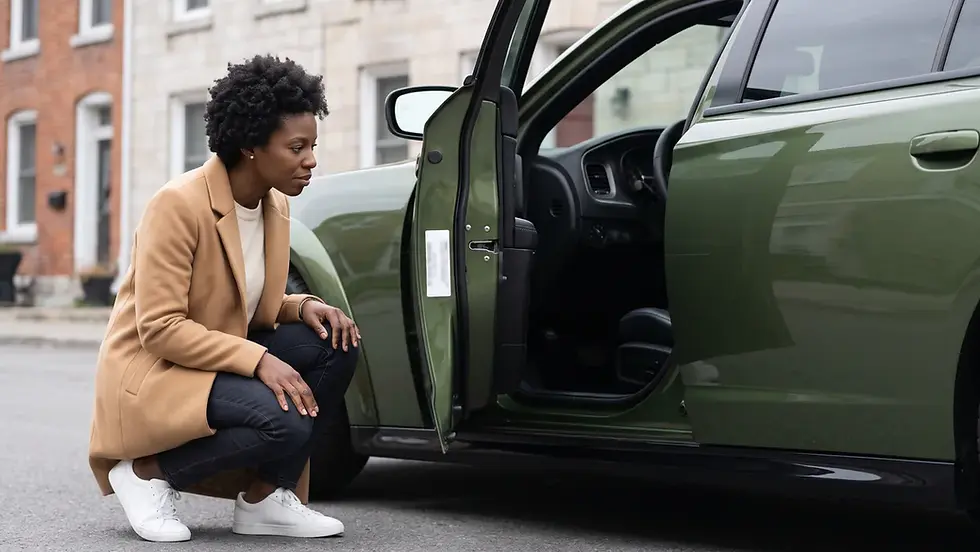
Where the cluster can show each tire, the three 2026 manuals say a low tire appears in a different colour from the others.
Where It Sits Among the Other Dashboard Lights
The TPMS light is one of many car dashboard symbols, and its job is watching tire pressure.
Is Kingston's Cold to Blame When the Tire Pressure Light Comes On?
Cold can be the cause: the three 2026 manuals say "when the outside temperature decreases, the tire pressure will decrease," and the tire pressure light comes on when pressure falls below the system's low-pressure warning limit.
The three 2026 manuals list low temperature beside natural pressure loss through the tire among the reasons the system warns, so cold is one possible cause and not the only one.
Environment Canada's 1981-2010 normals for Kingston show an average November overnight low of about 0°C.
At Jim Thompson Chrysler, we see the first cold weeks of a Kingston fall as a good time to check every tire cold against the placard, the spare included.
A TPMS Light When You Leave Work
Your vehicle has sat outside at work since morning, and on a raw fall evening in Kingston the TPMS light is on when you start it.
Nothing about the tires looks wrong, and you have not pulled out yet, so this is the moment to check rather than hoping the trip home clears it.
Parked all day, the tires now count as cold by the three 2026 manuals' measure, ready to read against the placard on the driver's side.
If a tire reads low, or the light keeps coming back, your next call is to our service team.
Does the TPMS Light Go Off Once the Tires Warm Up?
No, not by driving: in the three 2026 manuals' cold-weather example, the tires gain pressure as they warm on the road, yet "the TPMS Warning Light will still be on."
The three 2026 manuals say the light goes out only once the tires are at or above the recommended cold pressure on the placard.
For Jim Thompson Chrysler in Kingston, a cold-morning TPMS light is a check to do with the tires cold, not a wait for the afternoon.

Why a Warm Tire Shows More Pressure
A warm tire shows more pressure because driving builds it, and the three 2026 manuals call that rise normal.
Letting air out of a warm tire to match the placard works against you, because the three 2026 manuals say not to reduce that normal build-up.
The placard figure is a cold pressure, and the three 2026 manuals count tires as cold "after the vehicle has not been driven for at least three hours."
When Does a TPMS Light Flash Instead of Staying Solid?
In the three 2026 manuals, a TPMS light flashes when the system detects a fault and will then "remain on solid." A TPMS light that comes on solid without flashing means, in the three 2026 manuals, that one or more of the four road tires is low.
While the TPMS fault light is on, the three 2026 manuals warn the system "may not be able to detect or signal low tire pressure as intended."
A flashing light is still a reason to measure the tires once you have safely stopped, and to have the monitoring system looked at.
The three 2026 manuals also describe a chime, a cluster message asking for the tire pressure monitoring system to be serviced, and dashes where the reading from an unreceived sensor would be.
The 2026 Ram 1500 manual adds that the fault light returns at every start for as long as the fault exists.
Snow, Ice and Other Fault Causes
Snow or ice packed around the wheels is on the three 2026 manuals' list of fault causes, beside interference from nearby radio-frequency sources, tire chains, and wheels or tires without TPMS sensors.
The 2026 Ram 1500 and Pacifica manuals add aftermarket window tint to their fault causes.
After a slushy run on Highway 401, mention the snow when you describe a flashing light to our service team.
Swapping Wheels for the Season
The three 2026 manuals list wheels or tires without TPMS sensors among the causes of a system fault, and say the system is set for the original-equipment tires and wheels.
In the three 2026 manuals, equipment of a different size, type or style may mean poor operation or a damaged sensor.
The three 2026 manuals also ask drivers to check the TPMS malfunction light "after replacing one or more tires or wheels."
In the three 2026 manuals, a winter set on wheels without TPMS sensors brings on the fault light. Plan for the wheels before the changeover to winter tires in Kingston.
Know the System in Your Vehicle
"Make sure you understand the tire pressure monitoring system installed in your vehicle," Transport Canada advises in Riding on Air, its tire safety guide.
The solid and flashing behaviour described here is taken from the three 2026 manuals, and our service team can explain how the system works on a different model.
How Urgent Is the Tire Pressure Warning Light?
A tire pressure warning light is urgent enough to stop at the first safe place: the 2026 Ram 1500 and Pacifica manuals say "you should stop as soon as possible and inflate the tires."
Transport Canada's instruction in Riding on Air is "When a monitoring system warns that pressure is low, measure your tire pressure," and it asks for that check promptly.
Driving on a significantly underinflated tire "can lead to tire failure," the three 2026 manuals say.
"Improperly inflated tires are dangerous and can cause collisions," reads a warning in the 2026 Ram 1500 and Grand Cherokee manuals.
A Tire That Looks Low or Steering That Feels Wrong
Pull over right away, somewhere well clear of traffic, if the light comes with a tire that looks low or flat, or with a change in steering, noise or handling.
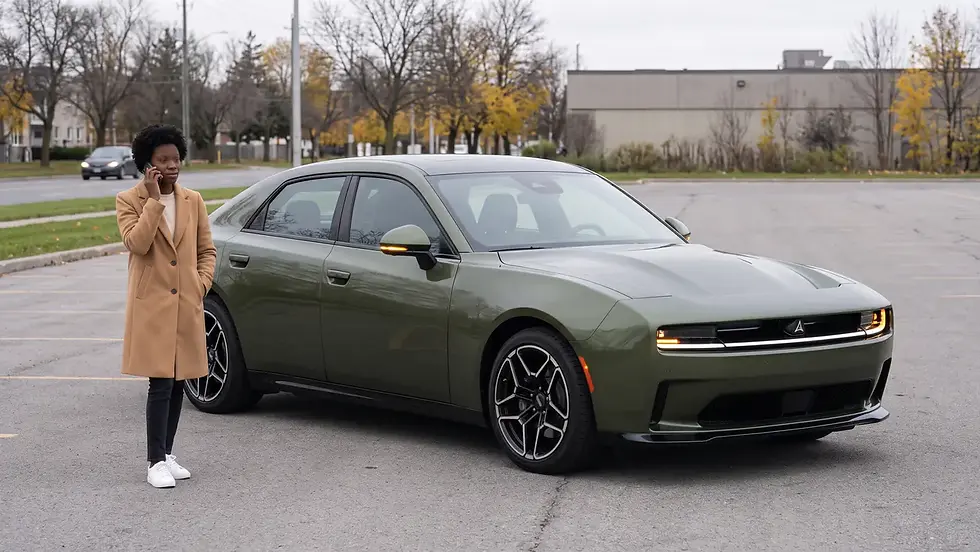
Riding on Air says "Avoid driving on a seriously underinflated tire for your own safety."
Once you are stopped, use roadside assistance if you have it, and call 911 if anyone is in danger.
With a tire going flat or a vehicle that feels unsafe, help comes from roadside assistance or 911, never from a service request, a phone call to our team or Signature Service.
Once everyone is safe and a tire is still losing air, call our service team and work out together how the vehicle reaches Gardiners Road.
A Low Tire Pressure Light With Tires That Look Fine
A low tire pressure light with tires that look fine still means a gauge check, because Riding on Air says "You can't tell if your tires have enough air just by looking at them."
Measure the tires as soon as you can safely stop, as Riding on Air asks. Read each one against the placard on the driver's side, keeping in mind that the three 2026 manuals call the pressure rise from driving normal.
If a tire reads below the placard pressure, or the light returns after the tires are back at the placard, our service team can look at why.
How Often Should Kingston Drivers Check Tire Pressure in the Fall?
Check tire pressure "at least monthly," as the three 2026 manuals ask, and more often when outdoor temperatures swing: the 2026 Ram 1500 and Pacifica manuals say "Check tire pressures more often if subject to a wide range of outdoor temperatures."
Our service team counts the first frosty nights in Kingston as the kind of wide swing the 2026 Ram 1500 and Pacifica manuals describe, worth an extra cold check.
On everyday checks, the three 2026 manuals also say:
"The TPMS is not a substitute for proper tire maintenance."
The driver stays responsible for keeping the pressure right with an accurate gauge, even when the light is off.
"Seasonal temperature changes will affect tire pressure."
The slide from fall into winter is a seasonal temperature change in its own right.
The Spare Tire and the TPMS
A compact spare is not watched by the TPMS in the three 2026 manuals, and each manual says so in its own words.
The 2026 Grand Cherokee manual says "A TPMS sensor is not offered on any size spare tire," and the 2026 Pacifica manual says its compact spare "does not have a Tire Pressure Monitoring System sensor."
The 2026 Ram 1500 manual says a compact spare, or a full-size spare that does not match the road tires, has no TPMS sensor.
In all three 2026 manuals, a compact spare put on in place of a low tire leaves the TPMS light on and brings the fault flash until the original tire goes back on.
Riding on Air puts the spare on the checklist: "Measure the pressure when your tires are cold, and don't forget the spare."
A cold check against the placard applies to a set of winter tires too, from the day it goes on.
When Is a TPMS Light More Than a Pressure Check?
A TPMS light is more than a pressure check when it flashes and then stays on, when it keeps returning after the tires are back at the placard pressure, or when it comes on after a tire or wheel change.
For a flashing light, a returning light or a light after a tire change, Request Service and note whether it flashed and when it first appeared.
A service request asks for a preferred day, and our service team confirms the time with you.

The three 2026 manuals describe the light as covering "slow pressure loss" as well as low pressure.
Show our service team a light that keeps returning, rather than resetting it.
Through the No-Wrench Vehicle Inspection
Our No-Wrench Vehicle Inspection page lists "TPMS Warning Light" among the concerns that may be eligible, for warning lights that "can be initially investigated without mechanical disassembly."
When you call, our service team can tell you whether the No-Wrench Vehicle Inspection suits your TPMS light.
Leave the Trip to Gardiners Road to Our Team
Within Kingston city limits, our team can bring a vehicle that is safe to drive, with tires that are holding air, to Gardiners Road and back through JTC Signature Service.
While our team has the vehicle, you carry on at work or at home rather than sitting at the dealership.
A call to our service team sets up the day, Monday through Friday and based on availability.
Ask about a loaner when you call, since loaners depend on availability, or contact our service team for more details.
Signature Service is never the way to move a vehicle with a tire that is losing air, or any vehicle that is not safe to drive.
Frequently Asked Questions
Can a Low Tire Wait Until the Weekend?
No: with a solid TPMS light, "you should stop as soon as possible and inflate the tires," say FCA Canada's 2026 Ram 1500 and Chrysler Pacifica owner's manuals. "Avoid driving on a seriously underinflated tire for your own safety," warns Riding on Air, Transport Canada's tire safety guide.
What Turns the TPMS Light Off Again?
The TPMS light turns off once the tires are back at their cold placard pressure, not from driving alone, according to FCA Canada's 2026 Ram 1500, Grand Cherokee and Pacifica manuals. FCA Canada's 2026 Ram 1500, Grand Cherokee and Pacifica manuals count tires as cold "after the vehicle has not been driven for at least three hours."
Can the TPMS Still Warn of a Low Tire During a Fault?
No, not reliably: a TPMS light that flashes and then stays on solid signals a system fault in FCA Canada's 2026 Ram 1500, Grand Cherokee and Pacifica manuals. While the fault light is on, FCA Canada's 2026 Ram 1500, Grand Cherokee and Pacifica manuals say the system "may not be able to detect or signal low tire pressure as intended."
Will Winter Wheels Without Sensors Trip the TPMS Light?
Yes, as a system fault rather than a low-tire warning, because wheels or tires without TPMS sensors are on the fault list in FCA Canada's 2026 Ram 1500, Grand Cherokee and Pacifica manuals. FCA Canada's 2026 Ram 1500, Grand Cherokee and Pacifica manuals also say to check the TPMS malfunction light "after replacing one or more tires or wheels."
Does a Spare Tire Have a TPMS Sensor?
A compact spare has no TPMS sensor in three 2026 FCA Canada models: the Grand Cherokee manual says "A TPMS sensor is not offered on any size spare tire," and Pacifica's manual says its compact spare "does not have a Tire Pressure Monitoring System sensor." The 2026 Ram 1500 manual says a compact or non-matching full-size spare has no sensor.
Is a TPMS Light a Sign of a Leak?
Not necessarily: FCA Canada's 2026 Ram 1500, Grand Cherokee and Pacifica manuals say the light means pressure is "lower than the recommended value and/or that slow pressure loss is occurring." The 2026 Ram 1500, Grand Cherokee and Pacifica manuals also list cold among the reasons the system warns, so measure the tires once you have safely stopped.
Can the TPMS Replace a Monthly Pressure Check?
No, the TPMS does not replace a monthly check: "The TPMS is not a substitute for proper tire maintenance," say FCA Canada's 2026 Ram 1500, Grand Cherokee and Pacifica manuals. The 2026 Ram 1500, Grand Cherokee and Pacifica manuals leave the driver responsible for correct pressure with an accurate gauge, even when the light is off.
Find Your Next Step for a TPMS Light in Kingston
A TPMS light that arrives with a tire that looks low means pulling over before anything else. Otherwise, measure every tire against the placard as soon as you can safely stop, and bring a flashing or returning light to our service team.
Request Service with what the light did, solid or flashing, and when it first came on.
Visit us at 805 Gardiners Road, Kingston, ON K7M 7E6
Request Service to ask for a preferred date and time. A request is not a confirmed appointment until our service team contacts you.
Local: (613)-389-4426 Sales: (877)-251-9249 Parts: (888)-711-5309 Service: (888)-713-0742
About the Author:
Kerry Irven is the Vice President of New and Used Automotive Operations for Heighton Automotive Group, a family-owned and operated automotive group serving communities across Eastern Ontario. Kerry began his automotive career in new-car sales, building his experience on the showroom floor and working his way through multi-store dealership operations.
With over 25 years in the automotive industry, Kerry has helped grow automotive businesses from one location with 40 to 50 vehicles in stock to more than 500 vehicles across 10 rooftops. His hands-on background in both new and used-vehicle operations gives him a practical understanding of what customers look for when shopping for their next vehicle.
Throughout his career, Kerry has always been actively involved in staff coaching and in understanding customer wants and needs, helping ensure the businesses he works with continue to adapt to what customers are truly looking for.
One of the most exciting chapters of his career has been the shift into modern automotive marketing, embracing new technology, transparent pricing, customer-first inventory strategies, and new ways to create a better vehicle-shopping experience.
Kerry has completed extensive automotive training, including certification through the Ontario Motor Vehicle Industry Council, involvement with the Used Car Dealers Association of Ontario, Canadian automotive dealer training, and multiple customer service courses.
Born and raised on a farm, Kerry has always valued family, hard work, and a practical, down-to-earth approach. Joining Heighton Automotive Group and working alongside Thomas Heighton and family, along with managing partners Kyle Lothian and Martin Gougeon, has allowed him to bring those same values into the car business. It has also allowed Kerry to continue following a simple philosophy: treat every customer exactly the way he would want to be treated.


Comments